Flipkart is India’s e-commerce juggernaut, with over 150 million registered users. The product range is varied and vast, with over 100 million products. Investment in the development of UX, or user experience, ensures visitors to Flipkart enjoy the best possible shopping experience, and contributes to its massive success. Introducing Harini Karthik.
Harini is a Senior UX Research Manager for Flipkart, a role which takes in product knowledge, customer behaviour, design, strategy and marketing. In essence, it’s her job to deliver a shopping experience that keeps customers coming back. We catch up with Harini to learn more.
Can you tell us about a typical day for you?
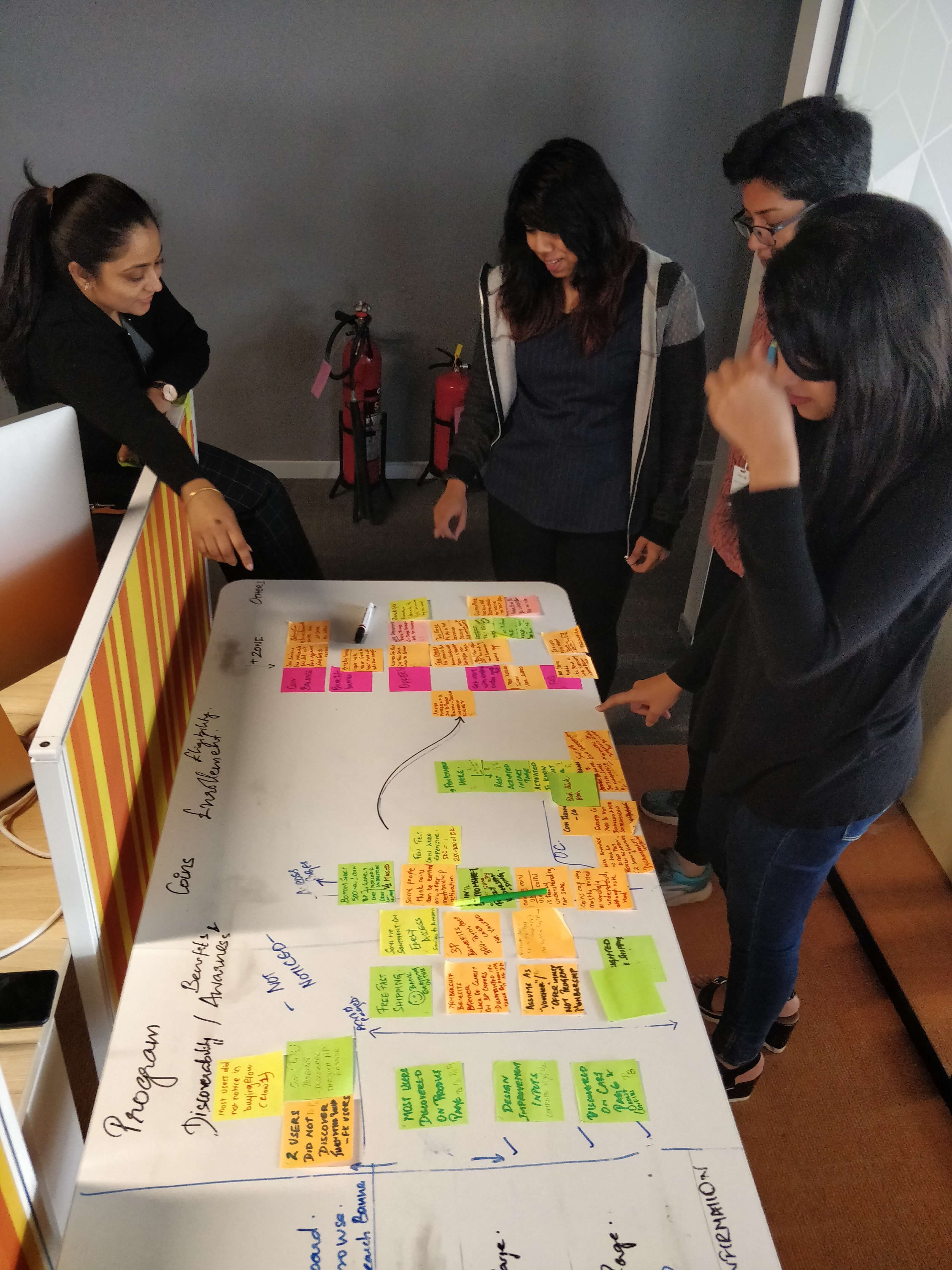 A lot of my time is spent discussing and reviewing research questions, documents, and artefacts with my team. We are a 10 person team spread across an equal number of research tracks.
On Monday we start with team stand-up to get everyone up to speed. As well as research reviews, a couple of hours is dedicated to attending Design and Product Reviews.
One-on-one mentoring sessions with my researchers and design team are spread across the week. Other jobs like managing AOP budgets for all the research tracks, owning research road maps, roadmap measuring and owning KPIs through monthly and quarterly reviews are also essential.
I also look at hiring, and constantly monitor any learning and development opportunities for my team. Managing procurement and vendors for Flipkart services are another very important aspect of my work.
What skills are most essential when starting out in UX?
I started out after my Masters in Design which laid out the foundation stones or rather, gave me an opportunity to explore this field, though I feel this is definitely NOT a requirement. I think the curiosity to learn, methodical problem solving, an ability to drive clarity when in ambiguous situations, and informed decision making are the most essential skills.
Are there skills or knowledge which can’t be learned before starting, and you have had to learn as you go along?
I learnt most things hands-on and my education was just an entry pass. Agency and corporate environments are definitely very different from academia. I have a lot of respect towards academic research for its rigour but opportunities to apply all that knowledge was limited when I was a student.
In a corporate set-up there is always the pressure of time, ROI, managing stakeholder expectation etc. My agency background gave me a good grounding into domain and process. It helped me gain experience of working across domains, products’ at different stages, and managing projects end-to-end.
My background from film making has also been a unique advantage. Using my research, filming, photography, and editing skills has been helpful in delivering outputs that are appealing and easily consumable.
Working within product set-up across different companies, and having had the opportunity to start this function ground up, setting up teams in the last 5+ years has given me more learning through experimentation. My current set of practices stem from the observations and experimentation from all my past work experience across the organisations I have worked with. So yes, I truly believe a lot of skills necessary for UX function happen as you go.
What particular products or projects do you love to be involved with?
I thoroughly enjoyed working with hardware during my stint in China, but the last 5+ years have been with e-commerce space in India. It has been incredibly challenging and the landscape has been fast changing due to changes in how digital services are used. The next crop of users, or Next Billion Users as we call them, are very different from the wave of users who were early adopters of e-commerce. So I am completely loving the space and problems I am working with right now.
What sort of challenges do you have to regularly overcome in your research projects?
I think my theme for the first year at Flipkart was to bake most products in Research with the teams and business I focused on.
I would like to think that it has been quite successful based on the way my company has received, accepted, and invested back in our function. This is quite obvious with the way we have scaled within such a short span of time, from nothing to a 10 member team.
While there are a number of mechanisms to ensure that insights are circled back into product/design it is still not 100%. I am sure the culture is evolving and I would like to see more progress in the coming months. Due to corporate processes within research itself, it is almost impossible to on-board individuals for services like participant recruitment who may have a better network than the agencies. So getting quality participants is a challenge, and we keep looking at new ways to make it better.
How do you keep staff motivated and focused?
It is important for Researchers to be embedded in the product, because it makes them feel they are part of creating something. Keeping individuals motivated with the long term engagement of researchers within a product area or business, and measuring results, seems to work well.
The central team is more like a place for them to feel at home, where they are able to get access to all the resources available, infrastructure, learning, and to leverage existing processes for procurement.
This helps researchers to focus on key work while the central team helps them with all the logistics. Also, researchers from our team come from diverse backgrounds in terms of companies, research areas and so on, which keeps things fresh. Sharing and learning across the team has been great so far.
There is a focus on Learning & Development, so team members attend conferences and workshops which is an important aspect of feeling engaged and motivated. I feel, over monetary benefits, it’s also important to recognise and appreciate ongoing efforts, which is slowly becoming the culture at Flipkart.